Inspiring Transformation
Through Creativity and Innovation

MarQuis Devon Hunt

About MarQuis Devon Hunt

A life that learned to listen.

MarQuis Devon Hunt's work has taken many forms. The practice beneath them has remained remarkably consistent: listen closely enough to perceive what is shaping the room, and something previously unavailable may become possible.

Formation

The questions came before the answers.

MarQuis was formed within the Christian tradition, the son of a Pentecostal preacher in Arkansas. Faith arrived not simply as doctrine, but as language, music, community, mystery, and an encounter with questions large enough to organize a life.

His spiritual inquiry eventually moved beyond the boundaries of a single tradition. The study of mysticism, interfaith thought, A Course in Miracles, and other traditions expanded rather than erased the grammar in which he had first been formed.

Over time, that inquiry became practice. Through spiritual direction, teaching, interfaith leadership, writing, and conversation, MarQuis began accompanying others not toward prescribed answers, but toward a more attentive relationship with their own lives, questions, faith, and becoming.

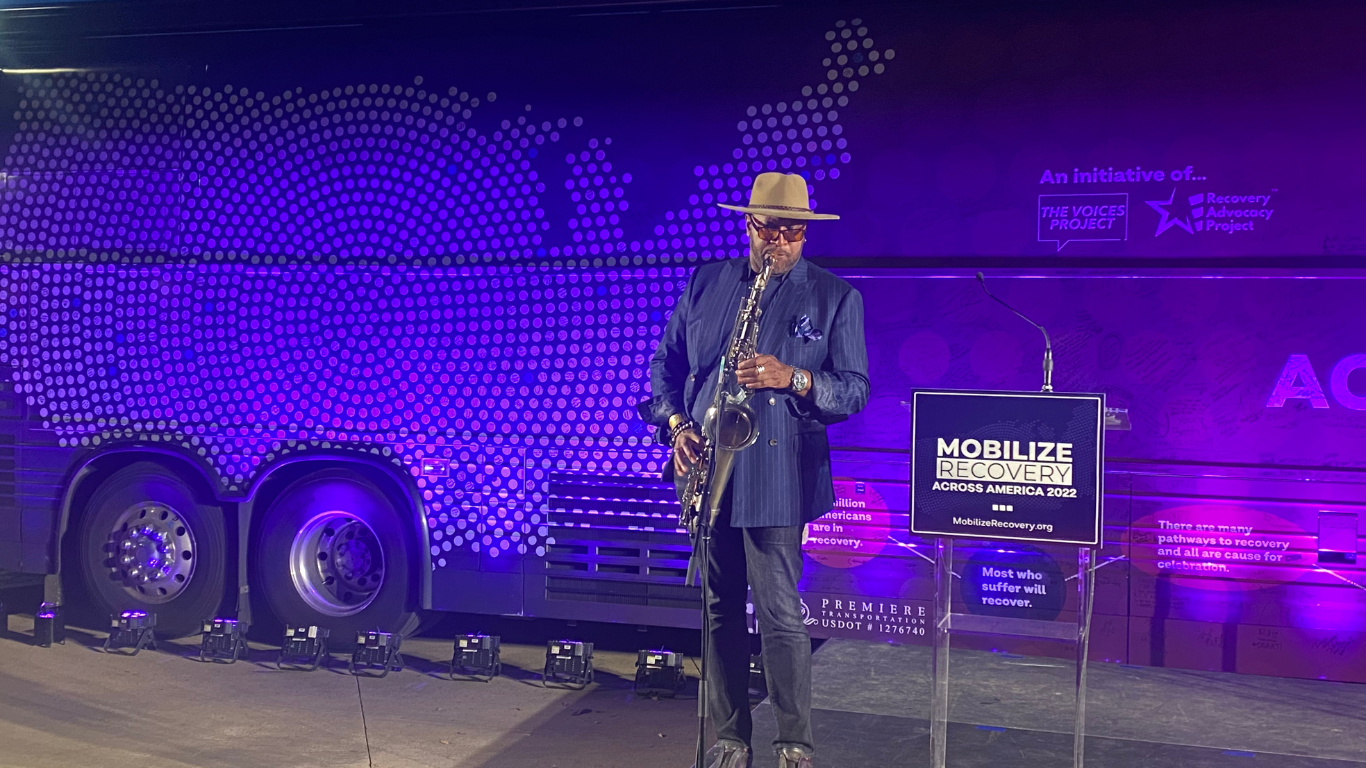
MarQuis Devon Hunt performing on saxophone

Improvisation

Music became another way of knowing.

Long before improvisation became language for his work with organizations and communities, MarQuis knew it through music.

As a soprano saxophonist, recording artist, composer, and collaborator, he learned that listening is not passive. Ensemble requires attention to what is present, what is changing, what another person is offering, and what the moment may be asking for next.

Improvisation became more than a musical method. It became a way of understanding relationship, leadership, tension, emergence, and collective intelligence: the possibility that people can create something together that none of them could have fully prescribed beforehand.

That sensibility continues through Modern MOOD and across MarQuis's wider practice. Music is not adjacent to the work. It is one of the places the work learned its grammar.

The disciplines changed. The question underneath them kept becoming clearer.

Writing & Ideas

Language gave the inquiry another form.

In The New Human, essays, talks, and an expanding body of intellectual work, MarQuis examines love, liberation, power, relationship, consciousness, money, technology, human formation, and the systems through which people learn what is possible.

Ideas including the Economy of Being and Improvisation as Praxis emerged from an effort to name patterns that often remain hidden precisely because they have become ordinary.

The writing does not sit apart from the lived practice. It gives language to what MarQuis has encountered in people, institutions, communities, music, faith, and the rooms in which human beings attempt to make meaning together.
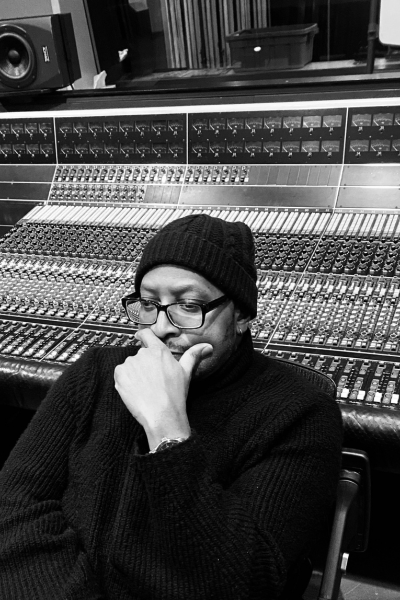
MarQuis Devon Hunt in the recording studio

Cultural Architecture

Eventually, the ideas required rooms.

Writing could name the questions. Music could embody them. Conversation could expose them. But MarQuis increasingly became interested in the conditions under which people might actually live, think, create, and encounter one another differently.

That inquiry helped give rise to Group 6-22, the nonprofit organization MarQuis founded and leads with collaborators committed to creativity, community, spirituality, and wealth as dimensions of cultural life.

The work asks an architectural question: rather than only changing what people say inside existing structures, what happens when we become attentive to the structure of the room itself?

01 / Institution

Group 6-22

As Founder and Executive Director, MarQuis works with collaborators to create spaces and practices in which artists, thinkers, leaders, neighbors, and communities can encounter one another beyond the limits of familiar institutional categories.

Explore Group 6-22

02 / Convening

The Convergence

The Convergence brings that architecture into concentrated form: interdisciplinary inquiry, facilitated conversation, writing, music, food, relationship, and shared attention gathered into a room designed not simply to present ideas, but to discover what becomes possible between people.

Explore The Convergence

The Rooms

The room kept changing.
The practice kept moving.

A room does not have to be a building. Across MarQuis's work, it has taken the form of music and meditation, a dinner table, a listening environment, and a distributed writing experiment. What persists is attention to the conditions that shape what people can perceive, offer, and create together.

FLoW

Music · Meditation · Inquiry

The FLoW

When the physical room disappeared, the practice did not.

From gathering to distributed inquiry

The FLoW began with Sunday-evening meditation over jazz: a community practice in which music, spirituality, philosophy, and inquiry could inhabit the same space.

When COVID disrupted the possibility of gathering physically, the practice moved online. After the murder of George Floyd, that virtual room became a site for deeper public inquiry, including conversations around The Spirituality of Whiteness and Build Black Better.

The container changed. The underlying practice—using attention, relationship, music, and inquiry to make difficult things available for collective examination—kept moving.

“The meal is not the feature. You are.”

B Street Family Dinner

The table became a room.

Food · Hospitality · Relationship

B Street Family Dinner is a recurring, invitation-based gathering co-created by MarQuis Devon Hunt and Cynthia East-Malik. The meal matters, but it is not the feature. The people are.

Food, hospitality, conversation, and sustained relationship become part of the architecture. People who may not ordinarily find themselves at the same table are invited not simply to attend an event, but to practice being with one another.

The room is built again each time the table is set.

Modern MOOD at SŌ Restaurant

UnMuted Listening Room

Listening became a room.

Music · Presence · Encounter

Co-created by MarQuis Devon Hunt and Cynthia East-Malik, UnMuted brings music, hospitality, proximity, and conversation into an intimate listening environment.

Its roots at SŌ Restaurant developed into a form that could travel, including an iteration in Detroit at Fixins' Hush Harbor. The point is not simply to place musicians before an audience. The musicians, guests, food, sound, and atmosphere together create the experience.

Music is played in service to the room—and listening becomes something the room does together.

Converging on Purpose collective writing project

Converging on Purpose

Writing became a room.

Writing · Encounter · Collective Authorship

Converging on Purpose extends cultural architecture beyond a single physical gathering. The Group 6-22 collective writing experiment invites participants to enter four bodies of MarQuis Devon Hunt's intellectual work: Economy of Being, The Healing Table, AI & The Unfinished Mind, and The Invisible Center.

Through a sequence of individual writing, encounter with another person's sight, live reflection at The Convergence, and AI-assisted editorial processes, the work creates conditions in which many situated perspectives can meet without requiring them to become the same.

The room exists across people, prompts, technology, time, and place—and continues toward collective publication.

Explore The Convergence

The room is not necessarily the building. It is the architecture of conditions that shapes what can become possible between us.

The Continuing Practice

One practice.
Many forms.

Today MarQuis Devon Hunt works across forms that are often separated by profession: philosophy and music, spiritual direction and organizational inquiry, writing and public conversation, intimate dialogue and large gatherings.

Their relationship is the point.

Across each setting, the practice is one of attention: listening for what has become difficult to see, noticing the conditions shaping what people believe is possible, and helping create enough room for another possibility to become perceptible.

Sometimes that takes the form of a book. Sometimes a question. Sometimes a board conversation, a saxophone, a meal, a stage, a spiritual direction session, or a room filled with people who would not ordinarily find themselves together.

Selected Work & Record

Author
The New Human and an expanding body of essays and intellectual work.
Founder
Founder and Executive Director of Group 6-22 and founder of The Convergence.
Music
Soprano saxophonist, recording artist, composer, collaborator, and leader of Modern MOOD.
Spiritual Practice
Spiritual director and longtime participant in interfaith and contemplative work.
Collaborations
Musical work and collaborations spanning gospel, jazz, popular music, recording, performance, and live improvisation.
Archive
Work preserved in the Harvard Divinity School archive .

The work is not about bringing the same answer into every room. It is about becoming able to see the room more clearly.

Begin a Conversation
Scroll Up